
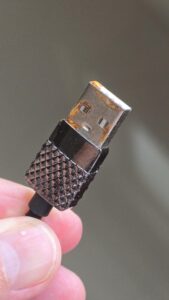
We all have the same situation: our equipment operates outdoors. Sometimes, weather conditions require covering it; sometimes, you have your own dome. If you are lucky and have a supportive family, your dome is equipped with sensors that allow it to react to the weather, but most often it’s just a tarp, a cover you have to put over your telescope yourself before it starts raining. But what about when it’s not raining, but the air is humid, like before a rain that hasn’t yet decided to fall?
Regardless of how you protect your equipment, it remains outdoors. This means that while a system of heaters will take care of the optics (which you’ve probably built and equipped with appropriate sensors), matters related to electrical signal conduction are often forgotten. And this is where a significant threat lies. Corroded USB interface contacts are an underestimated problem, resulting in lost frames from night sessions (which are difficult to notice) or frames collected during the collection of so-called flat frames.
Usually, when you touch or alter your optical train, you need flat frames to reflect the potential changes. 20, 25 or 30 frames, usually taken one after another, within half, one or three seconds, depending on the conditions set.
You set it to take 25 frames, but surprisingly, your disk has only 20. Or 18. You increase the number to 35, but it still shows 25.
This suggests a problem with your CPU, RAM, or USB, but it usually isn’t. Most often, the problem is the plugs and sockets on the cable and device (camera and PC).

Make sure you use the dedicated port on your PC. It’s best to use a USB-C port.
If you notice the problem, give your USB plugs a quick clean. Make sure the contacts conduct properly. Take care of them and always have a spare cable. It can save your night.
Also, it’s wise to use dedicated protection to cover the electrical joints with a protective surface that keeps moisture away. Regardless, regular checks will keep your equipment in good condition; if not mint, then very close to it. Also, you won’t face unpleasant surprises that force you to repeat overnight exposures.

More Stories
Refractor vs Reflector Telescope: Which Is Best for Beginners and Astrophotography?
What is PSF – Point Spread Function?
Dithering – is it really important?