Harmonic or strain-wave gears have become very popular in the last few years. What is so catchy to attract people to buy them?
How does the strain-wave gear work?
The harmonic drive system achieves a high gear reduction ratio in a very compact space. It is engineered to have virtually zero backlash and consists of three main components:
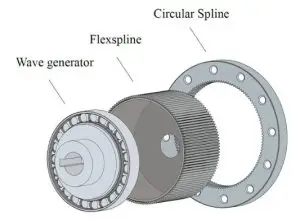
- Wave Generator: An elliptical metal plate (the input).
- Flexible Spline: A thin, flexible ring with external teeth that fits over the wave generator.
- Circular Spline: A rigid ring with internal teeth that is slightly larger than the flexible spline.
The rotating wave generator deforms the flexible spline into an elliptical shape. This deformation causes the teeth of the flexible spline to engage with the rigid circular spline only along the long axis of the ellipse. As the wave generator turns, the mesh point moves, causing the flexible spline to rotate relative to the circular spline slowly. This process ensures that multiple teeth are always in contact, which eliminates backlash.
Harmonic mounts offer several significant benefits that have made them a game-changer for astrophotographers:
- Zero Backlash: This is the most crucial benefit. Backlash—the slight mechanical play in traditional gears when reversing direction—is virtually eliminated. This makes autoguiding corrections on the Declination (Dec) axis much smoother, faster, and more accurate, as the mount can respond instantly without lag.
- High Torque and Payload-to-Weight Ratio: The unique gearing provides immense torque. This allows harmonic mounts (like the ZWO AM5 or iOptron HAE series) to carry a payload of imaging gear that is typically 3 to 4 times their own weight.
- No Counterweights Needed (Usually): Due to the high torque, the mount can hold the telescope rigid without needing the heavy counterweights required by traditional German Equatorial Mounts (GEMs), provided the payload is within the rated capacity.
- Extreme Portability: Eliminating counterweights and using a compact gearbox makes the entire mount head exceptionally lightweight and small, ideal for travelling and “grab-and-go” setups.
The popularity of harmonic drives in recent years is largely driven by their use in astrophotography telescope mounts, where their high torque, compact size, and elimination of counterweights are highly valued.
Based on current discussions and market availability, the most popular and widely recognised harmonic drive (or strain wave gear) mounts include models from major manufacturers:
-
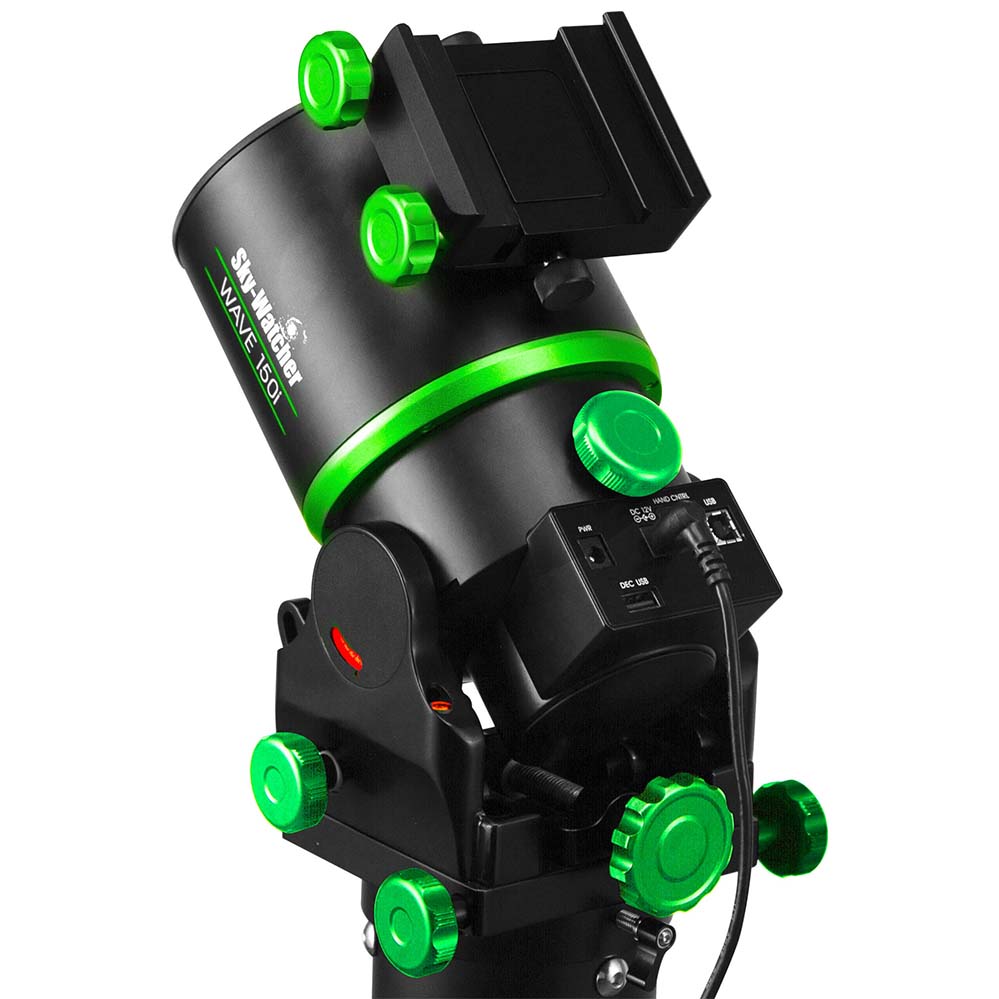
Sky-Watcher Wave-150i Harmonic Mount ZWO AM Series
-ZWO AM5: This is arguably the most popular and influential harmonic drive mount in the amateur astronomy community. It is known for its excellent balance of portability (often eliminating the need for counterweights) and substantial payload capacity. The AM series has become a benchmark for this new technology.
-ZWO AM3: A smaller, ultra-portable version of the AM5 with a slightly reduced payload capacity. - Sky-Watcher Wave Series
Sky-Watcher Wave 150i & Wave 100i: These are newer, highly competitive entrants from a major telescope brand. They are gaining popularity for their portability and robust feature sets, challenging ZWO AM5’s dominance. - iOptron HEM/HAE Series
iOptron HEM27, HEM44, HAE29: iOptron offers a wide range of harmonic-drive mounts that blend the strain-wave gear with traditional equatorial mount design elements. The HEM series is well-regarded for its range of capacities. -
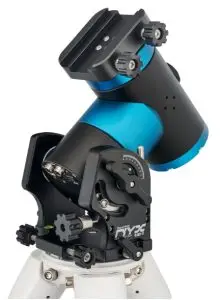
Pegasus NYX-101 Harmonic Gear Pegasus Astro NYX Series
Pegasus Astro NYX-101: This mount is a high-end option known for its very high payload capacity relative to its size and is favoured by astrophotographers who need to carry heavier optical tube assemblies (OTAs).
The key differences between Harmonic Drive (Strain Wave Gear) mounts and traditional Regular Equatorial (EQ) Worm Gear mounts stem from their fundamental mechanical designs, resulting in trade-offs in portability, backlash, and guiding.
Mechanical Design Implications
The contrasting gear systems lead directly to the performance differences:
1. Backlash and Autoguiding
Harmonic Drives eliminate backlash because their design ensures that multiple teeth are always in contact with the circular spline. This is a massive advantage on the Declination (Dec) axis during autoguiding, as the mount can instantly reverse direction without the hesitation or “lag” seen with worm-gear mounts.
Worm Gear Mounts require a small gap between the worm screw and the wheel for lubrication. When the motor reverses direction (which happens constantly during Dec guiding), this gap must be crossed before the motion starts, causing backlash and requiring software to manage the delay.
2. Weight and Setup
The Harmonic Drive’s unique mechanism provides extremely high torque and a high gear reduction ratio in a small form factor. This high torque means the mount can rigidly hold an unbalanced telescope setup without slipping, eliminating the need for heavy counterweights. This makes setup and tear-down dramatically faster and easier, making the mounts ideal for mobile astrophotography.
Worm Gear Mounts rely on physical balancing with counterweights to reduce motor load and prevent gear-mesh damage, but this approach makes the entire system heavy and cumbersome.
3. Periodic Error (PE)
Harmonic Drives tend to exhibit a larger, more pronounced periodic error (the slight deviation in tracking caused by manufacturing imperfections). However, because the error is smooth and the backlash is zero, autoguiding software (such as PHD2) can track and correct it very effectively.
Worm Gear Mounts, when perfectly tuned, can achieve a very low native periodic error. Still, even minor imperfections can introduce complex error profiles that may be harder for autoguiding to correct.
More Stories
A Magnitude confusion
What is Bortle?
Exposure time – how long is too long – Part 1